In plain English
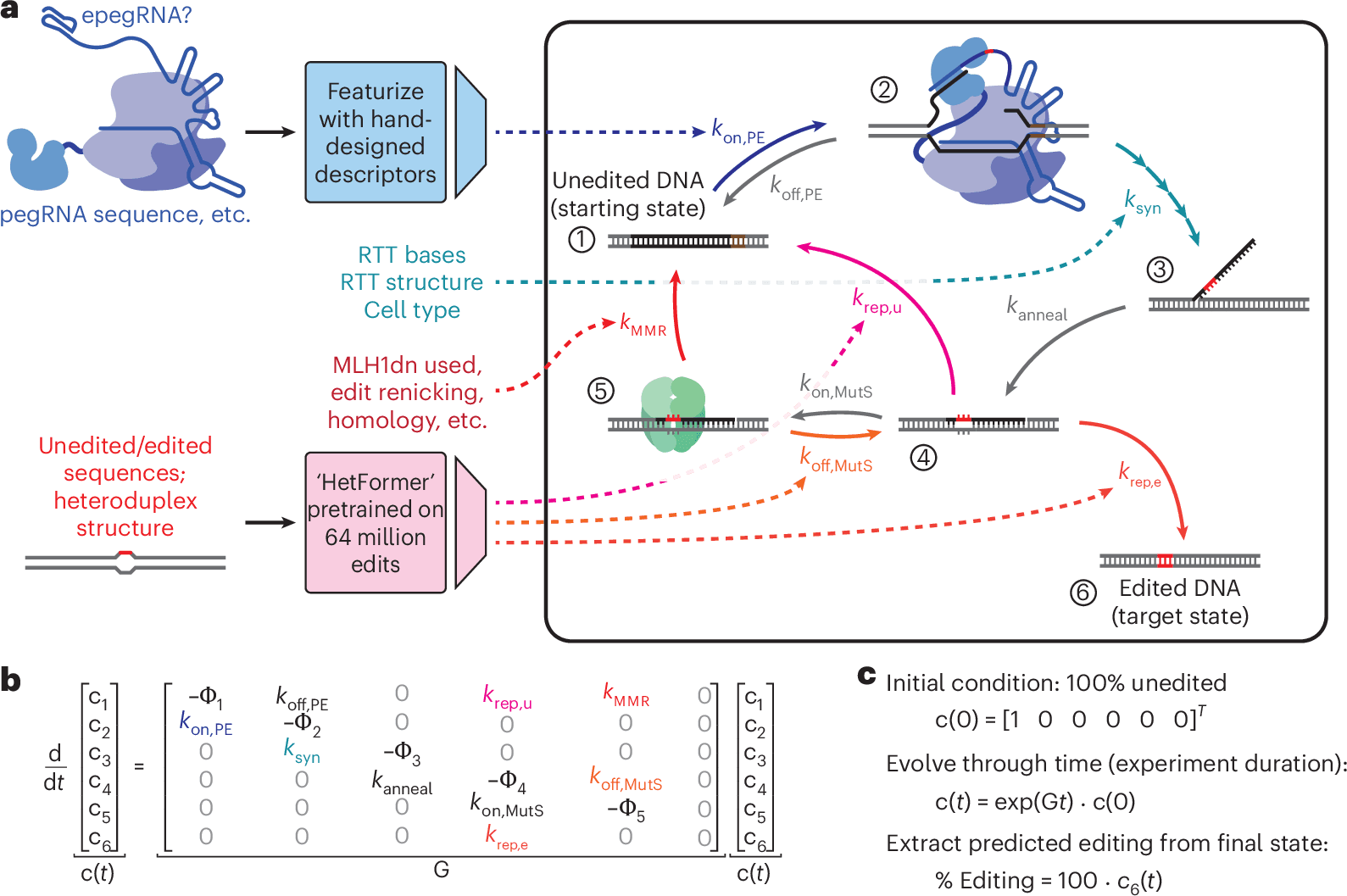
Rather than predict one editing score as a black box, OptiPrime models steps in the prime-editing process and uses the learned rates to estimate outcomes across PE3 and twin prime editing. The authors report prospective demonstrations in primary human and mouse cells and an in vivo correction of a pathogenic mutation in a mouse model of KIF1A-associated neurological disease.
How the study worked
A plain-language walk through the work behind the result.
Built a mechanism-based machine-learning framework for prime-editing efficiency and outcome prediction.
Tested predictions across PE3 and twin prime editing, then evaluated selected designs in primary cells and a mouse disease model.
What they found
- The model learned determinants associated with mammalian mismatch repair and nominated silent edits intended to evade that pathway.
- The authors report prospective editing improvements in primary cells and in vivo correction in mouse brain.
Why it matters
A mechanistic predictor may make prime-editing design more interpretable and transferable than a single opaque efficiency score.
The catch
- The abstract does not provide the full benchmark composition or error distribution.
- Prospective molecular correction in selected models does not establish clinical safety or efficacy.
- Performance outside the tested editors, cell types, and sequence contexts remains uncertain.