In plain English
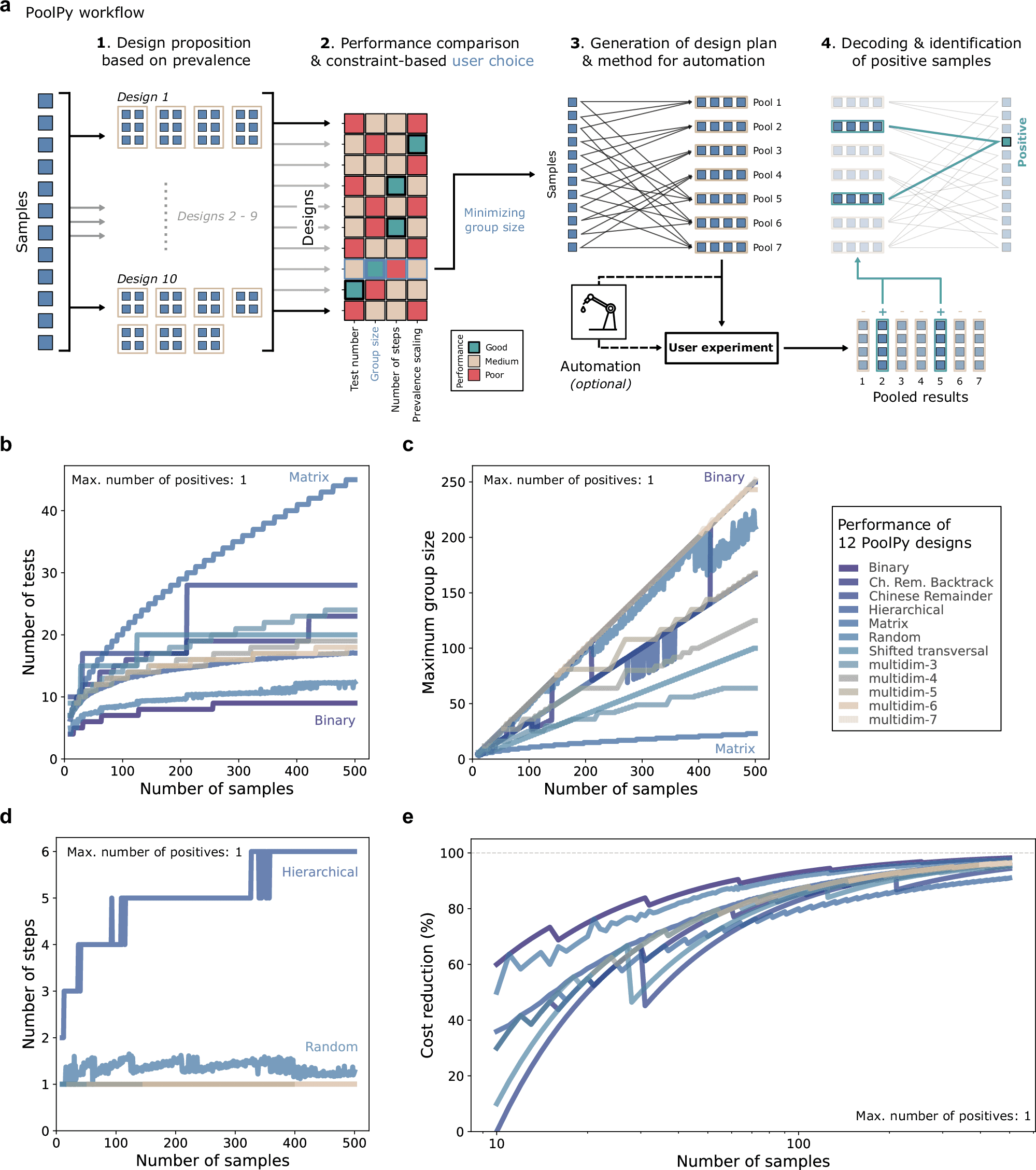
Instead of testing every sample one by one, the researchers used carefully designed pools and software that decodes which samples contain the signal. They benchmarked ten pooling algorithms, then tested the system in protein–ligand screening, viral RT-qPCR, and protein–DNA profiling.
How the study worked
A plain-language walk through the work behind the result.
Built PoolPy to design, benchmark, automate, and decode pooled experiments.
Benchmarked ten algorithms across more than 100,000 simulated conditions and validated selected designs in three experimental settings.
What they found
- The best design depended on practical constraints such as dilution, time, and cost.
- Across the experimental validations, pooling reduced required measurements by 60% to 93%.
Why it matters
A usable pooling tool can translate a classic statistical idea into lower-cost, higher-throughput biology without requiring every lab to build its own decoder.
The catch
- Pooling gains depend on prevalence, dilution, assay noise, and laboratory workflow.
- The reported reductions come from the tested applications and should not be assumed for every assay.